Hulls, decks and tanks corrode from the day a vessel is launched. Gecko inspects them with robots, through coatings, across the full plate, and keeps the record with the ship, so drydock time goes to the repairs that are actually needed.
Hull and deck surveys still mean spot readings through scraped paint and confined-space entries into ballast tanks and voids. The result is a partial picture taken at the most expensive possible moment, with the vessel out of service, and a plan built on what the surveyor could reach.
EMAT · THROUGH COATING
The whole deck. Through the paint.
THE WORKHULL · DECK · TANK
Robots on the steel, wherever it is.
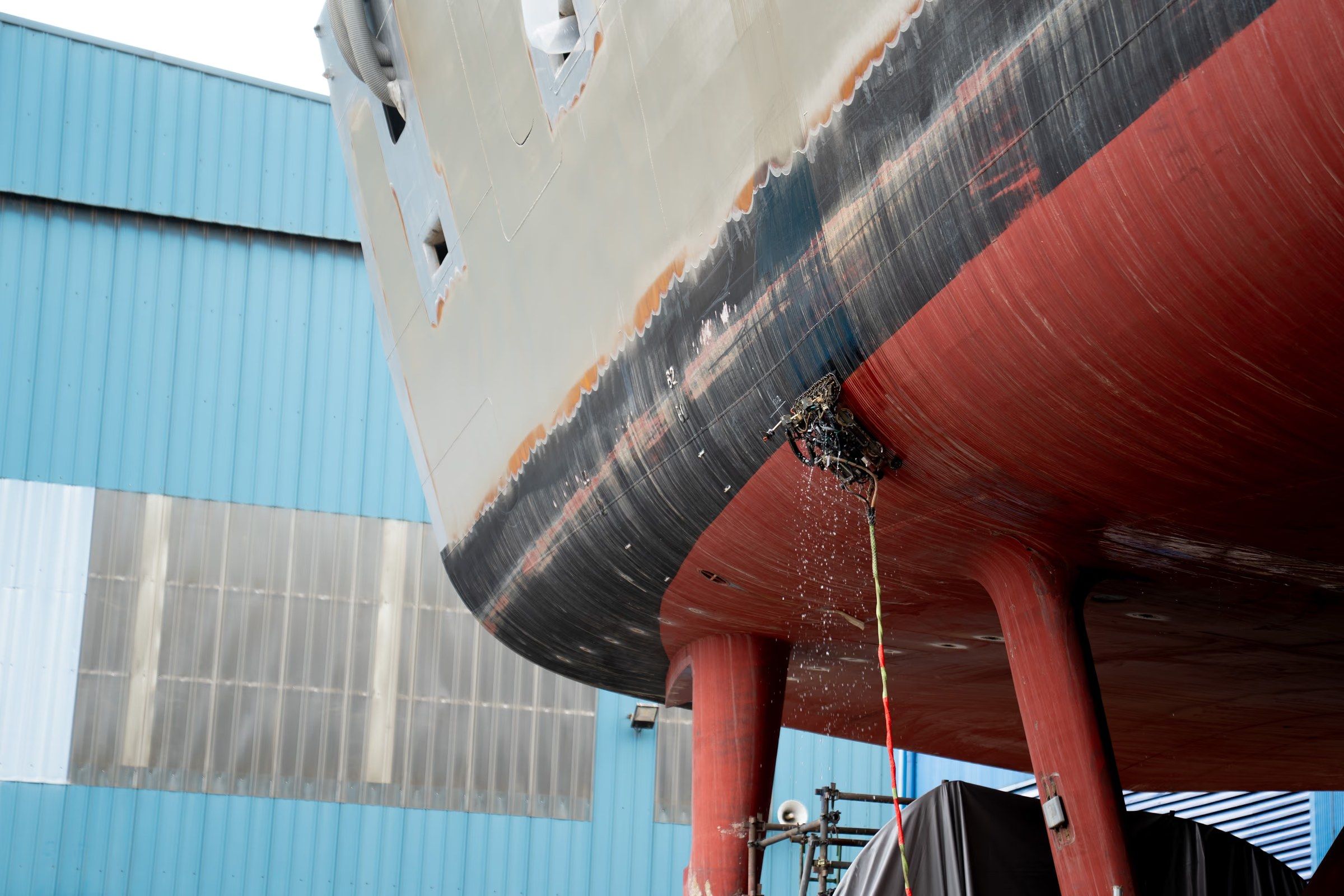
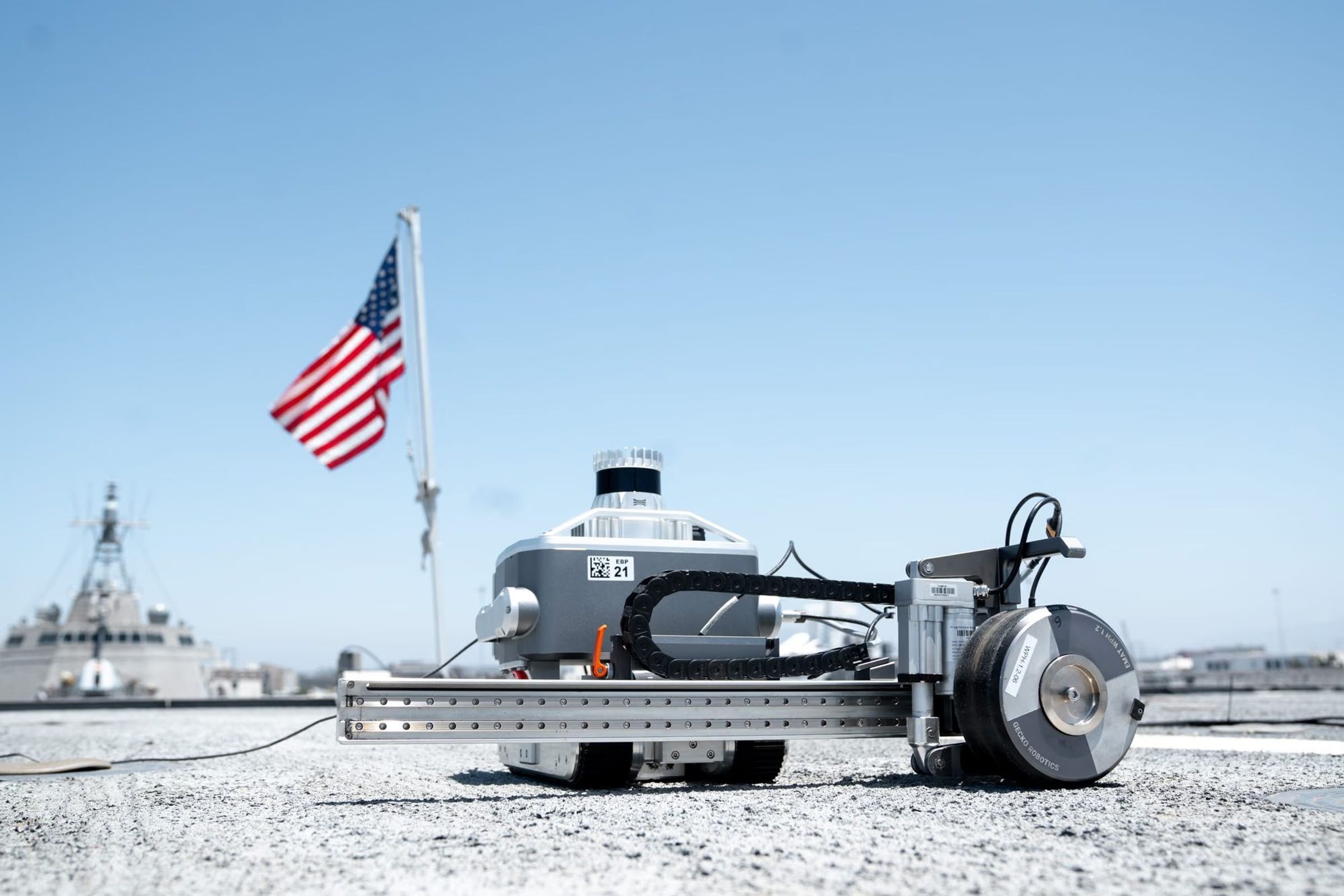
TOKA crawlers scan hull plate in drydock, capturing dense wall-thickness data along frames and seams. Komodo traverses weather decks with EMAT, reading through deck coatings without a single scraped patch. Crawlers take tank and void surveys out of the confined-space category. In-water hull inspection with Axolotl is in development. Everything lands in Cantilever®, mapped to the hull.
Hull plate
Full-plate thickness on the wetted hull and topsides in drydock, located against the ship’s frames.
Weather decks
EMAT through deck coatings on the Komodo platform, producing a deck-wide thickness map.
Ballast tanks & voids
Coating and wall condition captured by crawler, so people stay out of the tank.
Each survey is compared with the last, on the same hull geometry. Repairs are targeted by evidence, class surveys draw on data that already exists, and the next availability is planned before the ship arrives.