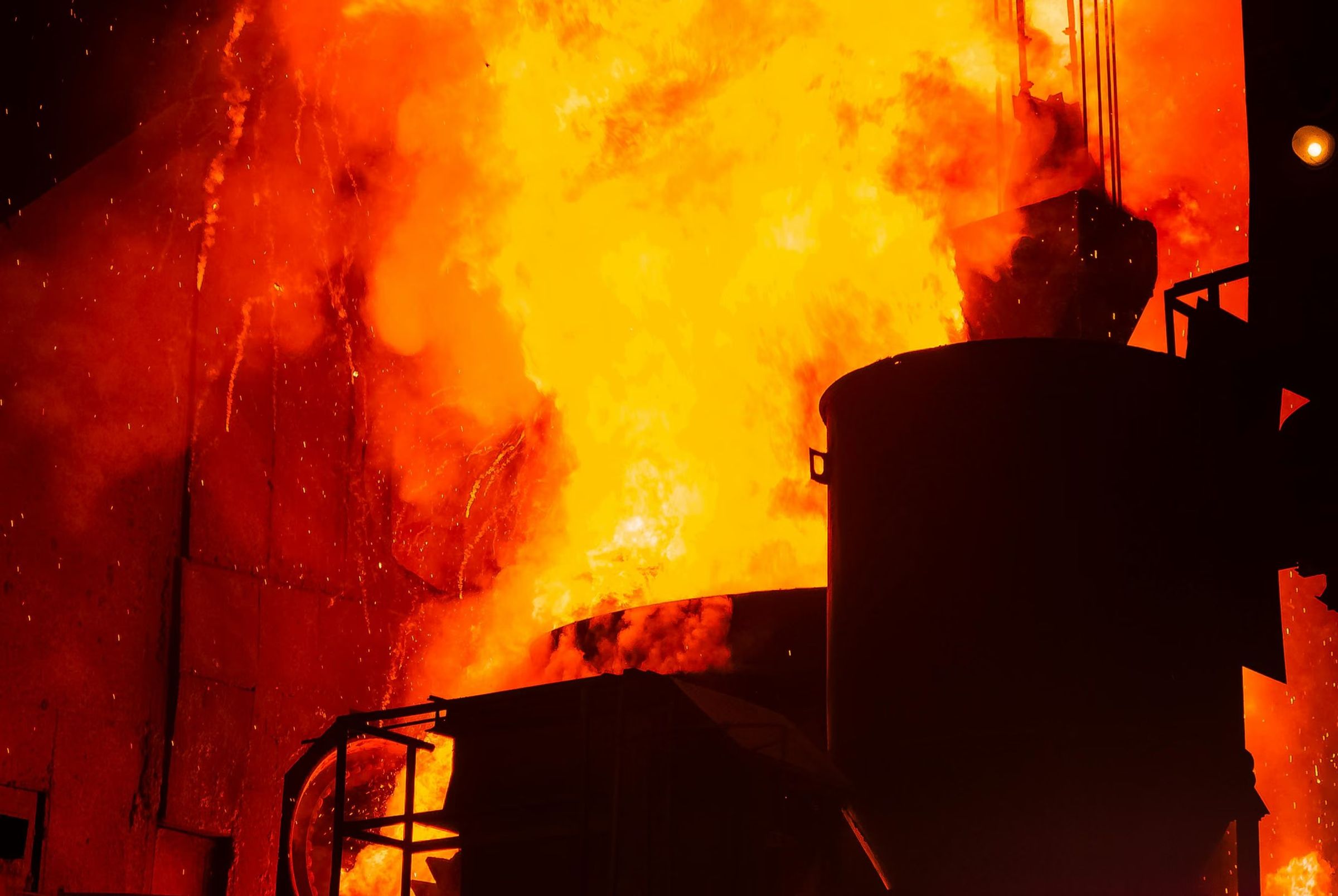
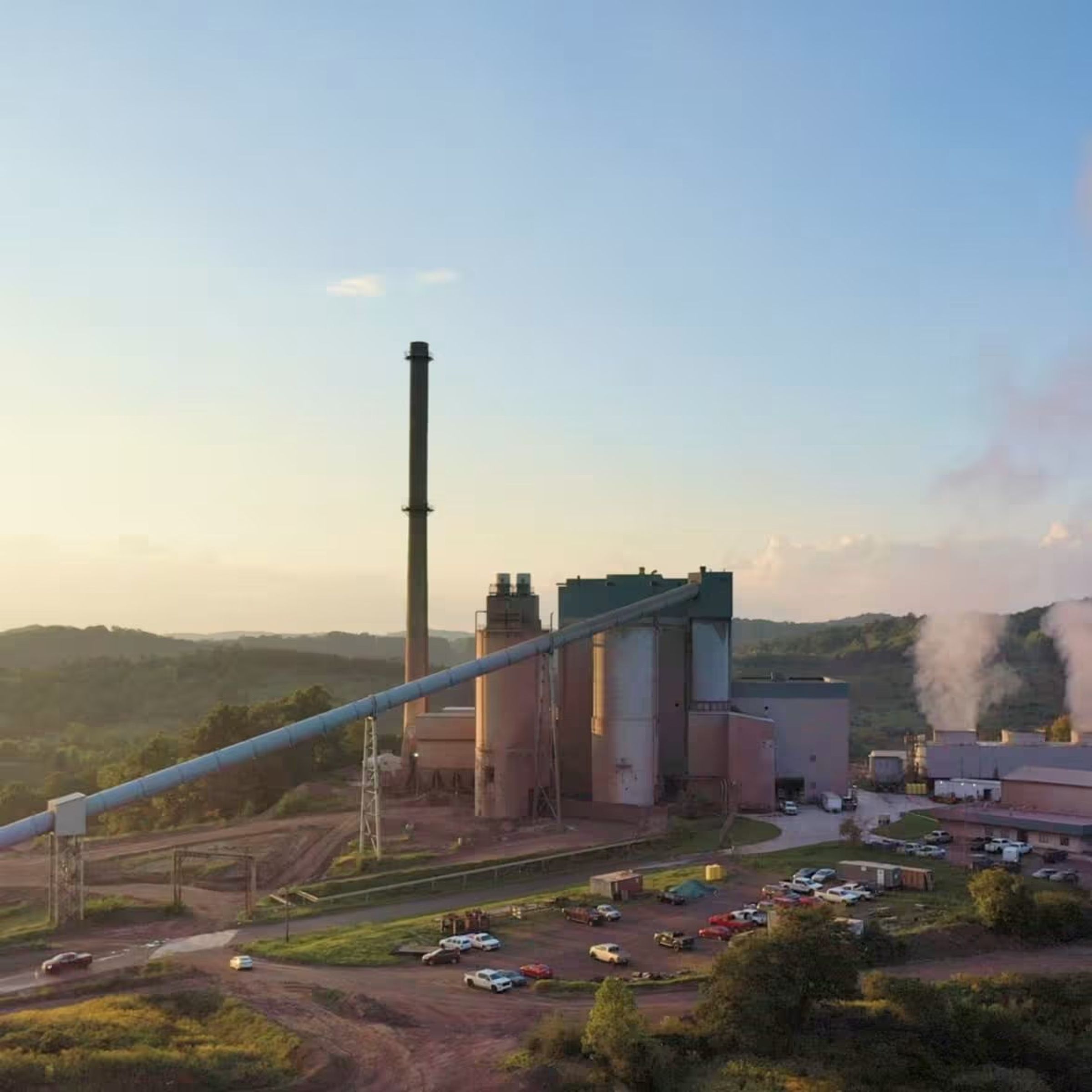
Steel, cement and mining run on equipment that is hot, abrasive and unforgiving: furnaces, ladles, kilns, slurry lines and process vessels. Gecko puts robots on those surfaces and turns what they find into a record the outage plan can be built on.
Refractory linings, furnace shells and slurry piping wear in ways that ordinary corrosion models do not predict, and the places that wear fastest are the places people should not be. So inspection waits for the outage, covers what it can reach, and the decision to run another campaign rests on a handful of readings.
SITE · CONTINUOUS PROCESS
Dense data from the surfaces that decide the campaign.
THE WORKFURNACE · KILN · SLURRY
Robots where the wear is.
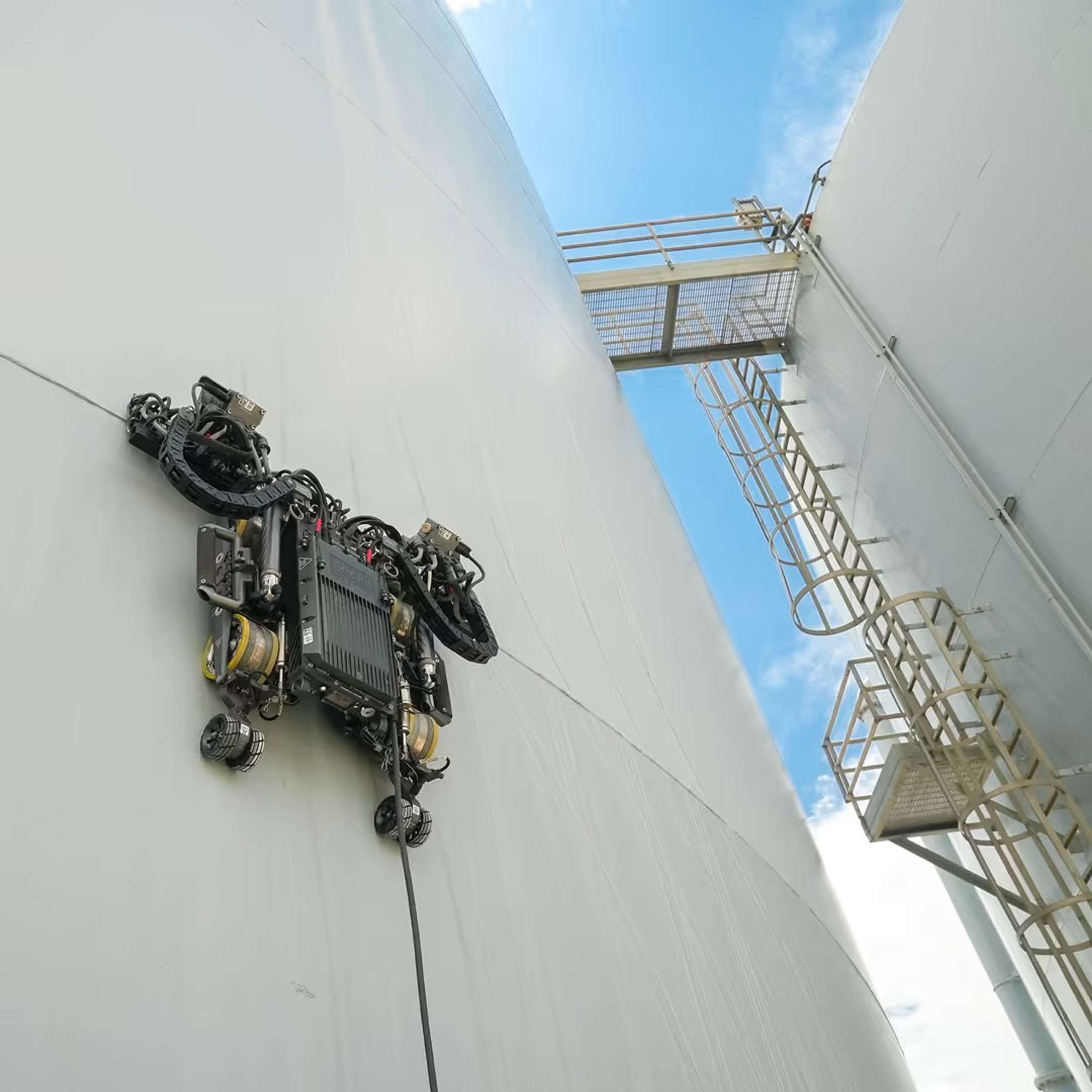
Magnetic crawlers raster across furnace shells, ladles, kiln shells and process vessels, taking wall-thickness readings through coatings with ultrasonic and electromagnetic payloads. Slurry and process piping are scanned along their length for erosion, not sampled at a few points. Findings land in Cantilever® against the asset’s geometry, so thinning shows up as a map.
Furnaces & refractory-lined vessels
Shell thickness and hot-spot indications across blast furnaces, stoves, ladles and kilns, without scaffolding the shell.
Slurry & process piping
Erosion mapped along the run, so the elbows and reducers that thin fastest are found before they fail.
Tanks, silos & structures
Storage and tailings-side assets inspected on the same platform, with the same record.
Furnaces, ladles, converters and the tank farms and piping behind them, running hot and running old. Full-coverage readings between campaigns, and a record that says what to replace and what to leave.
Slurry and leach tanks, thickeners and mill shells, often decades past design life with little data behind them. Crawlers read the shell; the record turns it into a maintenance plan the site can defend.
Digesters, recovery boilers, storage tanks and the piping between them, on mills that run on narrow margins. Measured condition instead of a replacement guess, and capital spent where the steel needs it.
Wall thickness recorded against the same geometry, outage after outage, becomes a rate. Rates make the campaign-length decision an engineering call instead of a bet, and put repairs where the data says they belong.